What an LED Retrofit Actually Pays Back for a Concord Warehouse
Why the payback is measured in a couple of years, how the load audit puts real numbers on it, and where the controls add the savings the fixtures do not.
Commercial lighting is one of the largest fixed loads most Concord businesses carry, and on old fluorescent tubes or metal halide high-bays it runs high and needs constant relamping. A warehouse in the Poplar Tent and I-85 industrial corridors, a retail floor near Concord Mills, or an office off Church Street still running dated lighting is paying a premium every month that an LED retrofit would cut hard. The question is how fast that pays back, and the honest answer is a number, not a pitch.
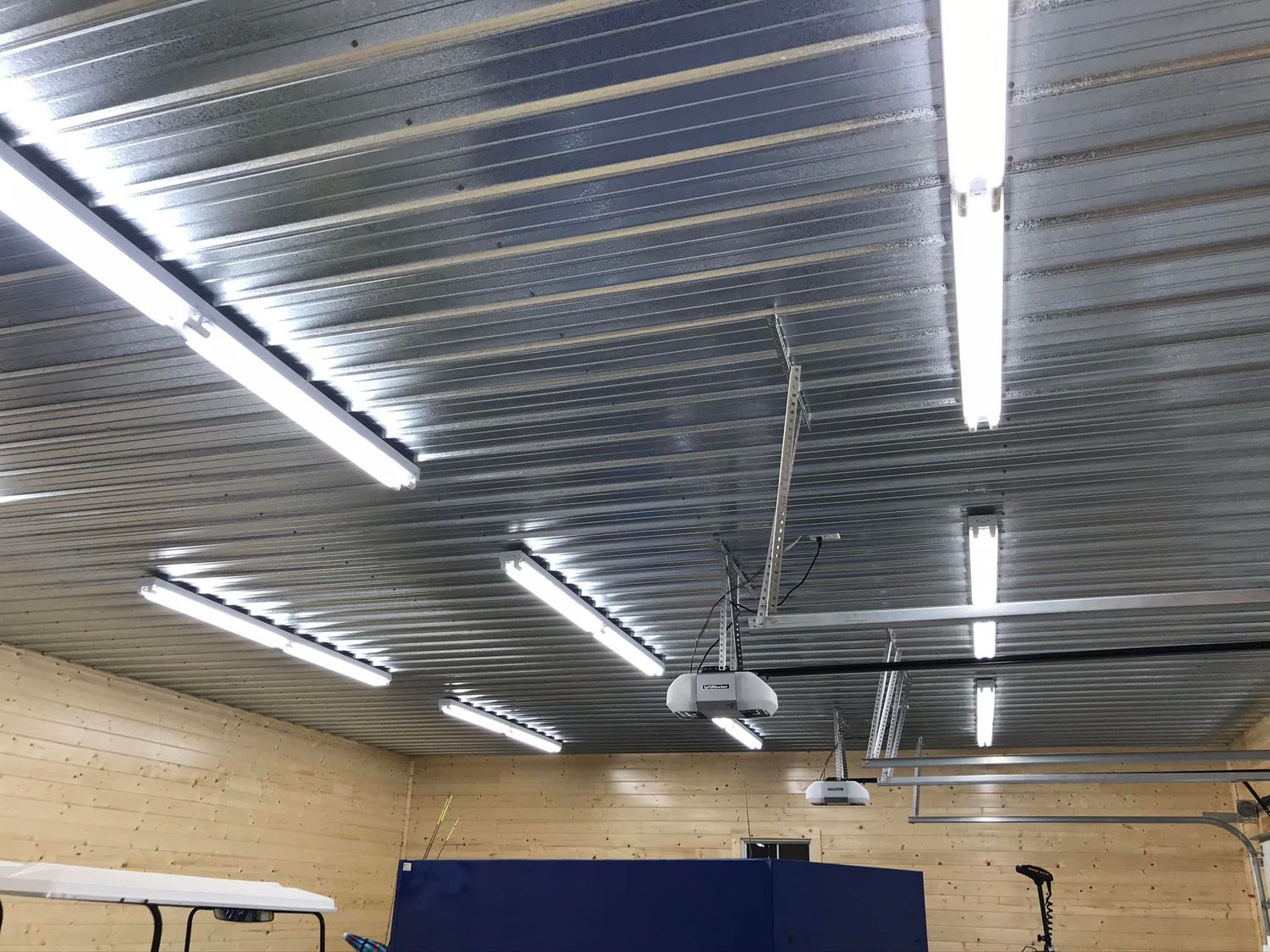
Where the payback comes from
An LED retrofit saves in two places at once, and both matter. The first is energy. A metal halide high-bay commonly draws around 400 watts, and its LED replacement draws a fraction of that for the same or better light on the floor. Across a whole warehouse full of fixtures running long hours, that draw reduction is the bulk of the savings, and it shows up on the power bill every month.
The second is maintenance. Metal halide and fluorescent lamps burn out and need replacing, and in a high-bay warehouse that means a lift, labor, and downtime every time a lamp goes. LED fixtures run for years without relamping, so the maintenance line that most operators quietly absorb largely disappears. For a warehouse running long shifts, that recovered maintenance cost is a real part of the payback that a fixture-price comparison alone misses.
Put the two together and a warehouse running old high-bays often pays back the retrofit in a couple of years, sometimes less, depending on the fixture count, the hours of operation, and the wattage before and after. That is why the retrofit starts with a load audit that puts the payback on paper before anyone commits.
How the load audit works
The audit is a count and a comparison. Bobby counts the fixtures, records what they draw now, and specs the LED replacement so the wattage before and after is on paper. Multiply the draw reduction by the hours of operation and the power rate and you have the energy savings, and add the recovered relamping cost and you have the full picture. The output is a payback window and a load reduction number, not a vague promise that LED “saves money.”
That transparency is the point. A Concord operator making a capital decision on a warehouse or retail floor should see the actual before-and-after and the payback math, so the retrofit is a business decision with numbers behind it rather than a leap of faith on a salesperson’s word.
Where the controls add the rest
The fixtures are most of the savings, but the controls are where a lot of the remaining bill lives. Occupancy sensors shut lighting off in areas nobody is in, which in a warehouse with aisles and storage zones that are not always occupied is significant. Daylight harvesting dims fixtures near windows and skylights when there is enough natural light. Scheduling runs exterior and floor lighting on and off automatically instead of relying on someone to flip switches.
Beyond the savings, current North Carolina energy code often requires lighting controls on a new layout, so on many retrofits the controls are not optional. Designing the control scheme to the space, whether that is a warehouse, a retail floor, an office, or a parking lot full of pole lights and wall packs, is part of doing the retrofit right rather than just swapping bulbs.
Scheduling and permits
Most Concord businesses cannot go dark for a lighting retrofit, and they do not have to. The fixture swaps and the circuit work are scheduled around operations, with the disruptive phases planned for off hours so a warehouse or retail floor keeps running through the job. The sequence gets scoped at the walk-through so the shutdown windows are short and expected.
On the permit side, a like-for-like fixture swap on existing circuits is often maintenance, but a new layout, added circuits, or a controls scheme is permitted and inspected work in North Carolina. Bobby tells you which category your job falls in and pulls the permit through the City of Concord or Cabarrus County when the scope requires it, so the retrofit is done clean and legal.
If you are running old lighting in a Concord warehouse, retail floor, or office and want the payback math, call 310 Construction at (704) 575-9463. Read the full service on the Concord commercial lighting page, see the service line on the commercial lighting page, or check our Cabarrus County coverage. Use the contact page to scope the lighting.
Common questions about Concord LED retrofits
How fast does an LED retrofit pay back for a Concord warehouse?
What does an LED retrofit involve for a Concord commercial space?
Do lighting controls really add savings?
Is a lighting retrofit in Concord permitted?
Can you retrofit without shutting down our Concord operation?
Get the payback math on your Concord lighting
310 Construction runs a fixture count and load audit so you see the load reduction and payback before you commit. Call or contact us for a walk-through in Concord and across Cabarrus County.